

For retailers today, managing product returns is one of the most difficult challenges that continues to grow more complex with the passing years. What seems to be a simple procedure is a puzzle of logistics, customer relations, warehouse work, and finance. Creating return labels, refund approval, inventory restocking, and determining resale or disposal are just a few of the actions that require multiple departments to work in tandem to solve. Each step along the way, if not managed correctly, can create customer relations problems as well as incur massive losses in profit for the company.
Some product categories such as apparel and electronics tend to have very high return rates because of problems with fit, product complexity, or shifting consumer trends. Consumers tend to purchase multiple copies of a product for the purpose of returning at least some of them, which is referred to as “bracketing.” In electronics, returns can be a result of compatibility problems or technical misunderstanding. During the holidays, return volumes peak very high, with electronics retailers sometimes experiencing rates as high as 15%. According to the National Retail Federation reports, U.S. retailers experienced more than $300 billion in returns in 2024. Without formalized systems in place, returns have the potential to eat into margins, fill up warehouse space, and hurt the customer experience.
Handling returns isn’t just about taking back a product. It affects inventory, shipping, customer service, and has a significant impact on the bottom line. Processing a $50 return can cost a business over $30. That’s why more companies are using Returns Management Systems (RMS). These tools help businesses manage returns more easily and efficiently. With an RMS, you can create return labels, track returned packages, issue refunds or exchanges, and even collect data about why customers return items. Most importantly, RMS platforms help companies recover more value from returns and reduce the number of returns over time by spotting product issues and improving customer communication.
Read our blog – Customer Returns Market: Trends and Opportunities in 2025
Here are 10 top RMS platforms in the U.S. market, each offering different strengths based on business size, type, and needs:
10 Best Returns Management Systems Solutions in the U.S.
1. Narvar
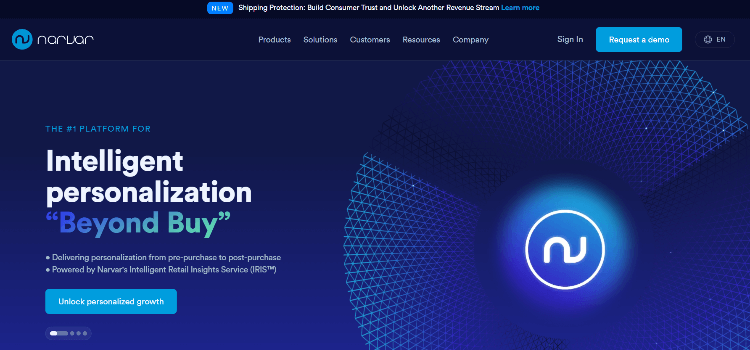
Narvar is a great option for enterprise and omnichannel retailers. It helps companies deliver a consistent and professional return experience across online and in-store sales. Narvar’s branded return portal makes it simple for customers to submit returns, and AI-based tools aid in detecting fraud, such as frequent misuse of return policies. It also handles multiple currencies and languages, making it ideal for global brands. Retailers with a large number of products and high return traffic will appreciate Narvar’s scalability. It is also highly compatible with other software, such as shipping, customer service, and inventory solutions. For companies in apparel, electronics, or home goods with complex return rules, Narvar offers granular policy settings. If you’re managing thousands of returns per month and need detailed policy control, multi-channel capabilities, and robust reporting, Narvar is a strong choice.
2. Loop Returns

Loop Returns is designed for internet retailers, particularly Shopify users. Loop is unique in its emphasis on exchanges based on returns. If a customer returns a shoe because of fit, Loop can recommend the correct size or a different style before the refund occurs. It maximizes customer satisfaction and allows businesses to retain more revenue.
Loop also has integrations with Klaviyo and Gorgias to help marketing and customer service align. Direct-to-consumer brands with fast growth adore Loop because it automates returns and provides a simple self-service. It’s best for fashion, footwear, and lifestyle brands that wish to increase exchanges, minimize refund losses, and provide a new-generation customer experience. If your company is growing rapidly and values revenue retention, Loop is an attractive solution.
3. Happy Returns
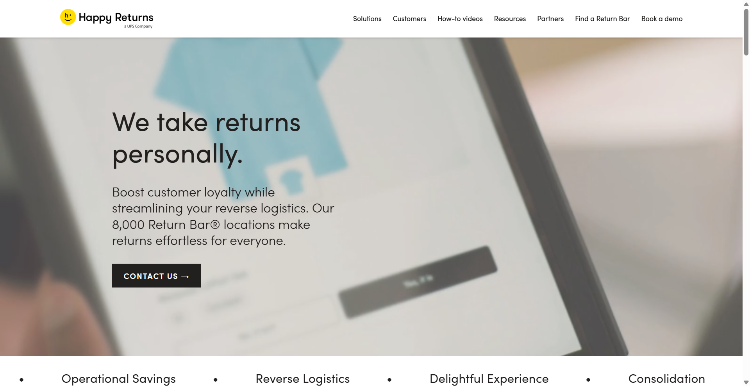
Happy Returns, a PayPal company, is known for its nationwide network of “Return Bars.” Customers don’t need a box or label, they just scan a QR code and drop off items at one of 5,000+ partner locations, including FedEx and local shops. This system reduces shipping and handling costs by bundling returns together before sending them to the warehouse. It also offers a digital return portal for online requests. Happy Returns makes the customer experience easier and speeds up refunds, which improves loyalty. It also integrates well with platforms like Shopify, Salesforce Commerce Cloud, and Magento. Happy Returns is great for mid-sized to large retailers looking to offer a super convenient return option and save on logistics. It’s especially useful for brands with high return volume or a customer base that values speed and simplicity, such as fashion, accessories, and consumer electronics.
4. AfterShip Returns
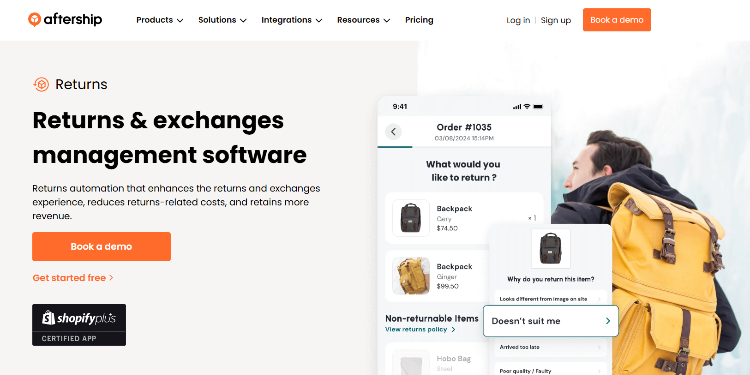
AfterShip is known for shipment tracking, and its returns module adds valuable functionality for global sellers. It supports returns in over 200 countries through integrations with more than 700 carriers. AfterShip allows customers to initiate returns online, select drop-off or pickup, and view real-time status. It also accommodates partial returns, which is helpful when a customer wants to return one item from an order of more than one item.
AfterShip provides branded tracking pages, global support in multiple languages, and intelligent return routing, reducing shipping expenses. It is perfect for expanding e-commerce brands or omnichannel merchants shipping worldwide and requiring robust logistics automation. If you’re looking for a returns solution that can scale across the globe and accommodate complex delivery networks, AfterShip is a candidate for consideration. It’s especially a good fit for electronics, apparel, and cross-border brands processing thousands of orders per month.
5. ReturnLogic
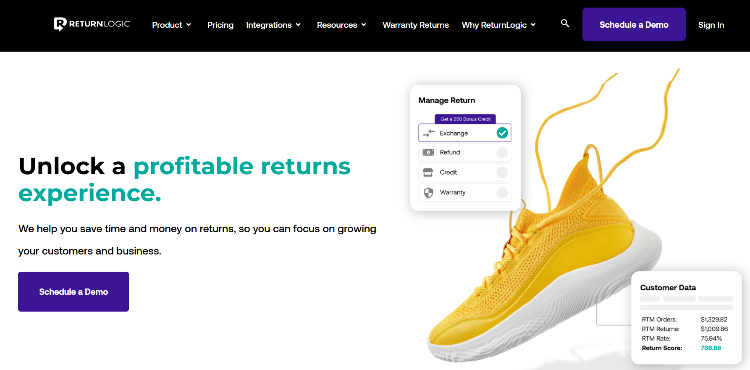
ReturnLogic gives mid-size e-commerce companies more control over how returns are processed. It allows businesses to set custom return rules, offer store credit or exchanges, and even manage warranty returns through the same system. ReturnLogic automates approvals, generates return labels, and provides insights about why items are returned.
The platform also supports product condition grading and dynamic routing for different return types. It’s especially useful for brands selling high-value items or goods with quality concerns that may need warranty services. Companies in categories like outdoor gear, fitness equipment, and health products will benefit from its flexibility. This solution is a good fit for online businesses with 10,000+ monthly orders that want more customization, efficiency, and insight than basic return tools offer.
6. Optoro
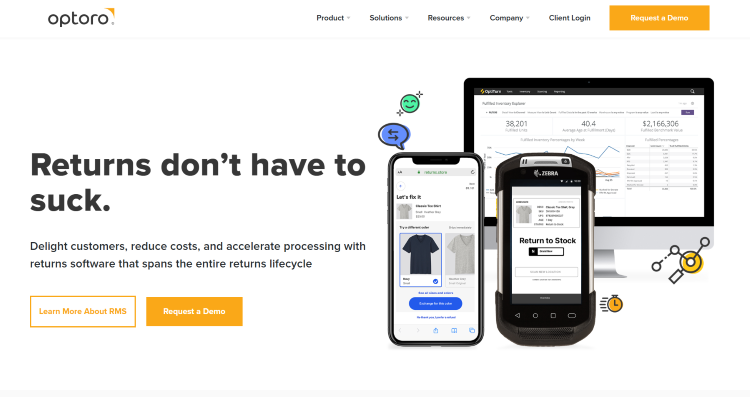
Optoro helps large retailers and logistics companies make better decisions about what to do with returned products. Should it go back to inventory? Be donated? Recycled? Resold? Optoro’s SmartDisposition® engine uses data to pick the best next step. This not only saves warehouse space and labor costs but also helps companies recover more money from unsellable returns. It supports integration with warehouse systems and recommerce channels, enabling returned inventory to flow seamlessly to resale marketplaces.
Optoro is used by many national retailers in apparel, furniture, and home goods. It works best for companies with a high return volume, especially those looking to reduce waste, support ESG initiatives, and improve profit recovery. If your returns process involves multiple warehouses or outlet channels, Optoro can help manage the complexity with speed and efficiency.
7. ReverseLogix
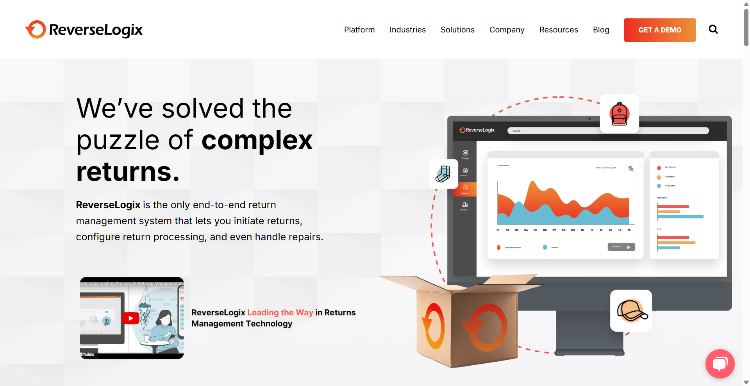
ReverseLogix is ideal for companies that handle many types of returns including consumer, business-to-business (B2B), warranty, repair, or recall. It brings all of these workflows into one platform. Businesses can track a return from the moment it’s requested to its final resolution, whether that means a refund, replacement, or repair. The platform supports workflows for depot repair, RMA approval, and inbound logistics coordination.
ReverseLogix is especially useful for electronics, medical device, and industrial product companies that need to manage returns from distributors and retailers as well as end-users. The system integrates with ERP, WMS, and CRM platforms, making it a powerful choice for complex supply chains. It’s best suited for mid-sized to enterprise companies that need to centralize complex returns operations and want full visibility into reverse logistics.
8. Appriss Retail
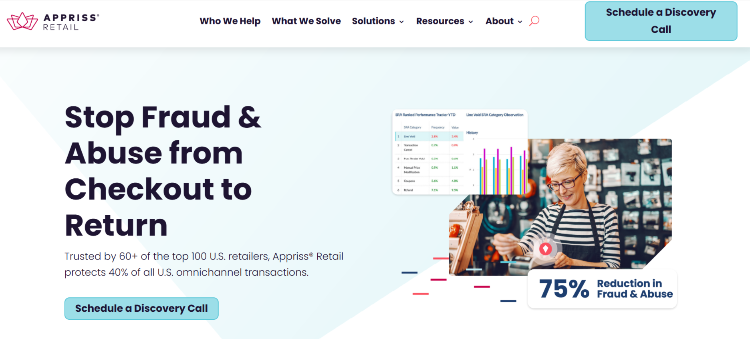
Appriss Retail is a specialty solution for preventing return fraud, especially in stores. It tracks return patterns and flags suspicious activity in real time, such as customers who return too frequently or use altered receipts. Over 60 major U.S. retailers trust Appriss to reduce abuse while still making the process easy for honest customers. The system integrates with POS systems and uses machine learning to score return risk instantly. Retailers in apparel, department stores, electronics, and discount retail use Appriss to protect margins and streamline staff decision-making. If you’re a large retailer with physical store locations and concerned about shrink from fraudulent returns, Appriss Retail can help enforce smarter policies without hurting customer satisfaction or tying up store associates.
9. Return Rabbit
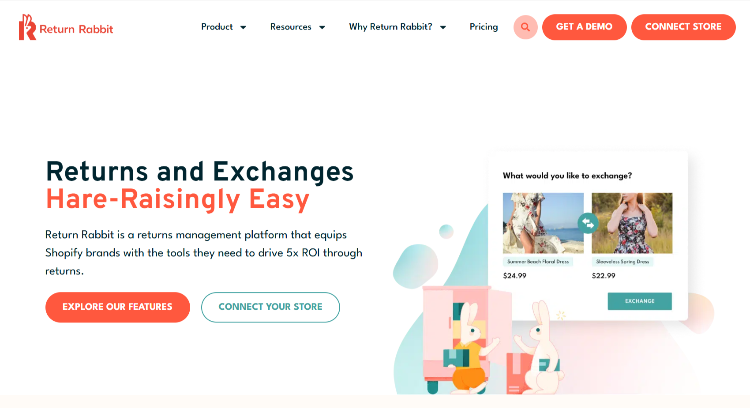
Return Rabbit is built for small and mid-size Shopify stores that want an affordable but polished returns process. It offers a branded return portal, smart product suggestions for exchanges, and analytics to track returns data. Return Rabbit is easy to install and doesn’t require technical support. It’s great for smaller fashion or accessory brands that want to improve customer satisfaction, encourage repeat purchases, and reduce refunds. The system also highlights which products get returned the most, helping brands improve product descriptions or sizing charts. Return Rabbit also supports bonus credit incentives to encourage exchanges over refunds. If you’re a growing Shopify brand with limited tech resources but high customer service goals, Return Rabbit is a great starting point to manage returns and grow loyalty.
10. ReturnGO
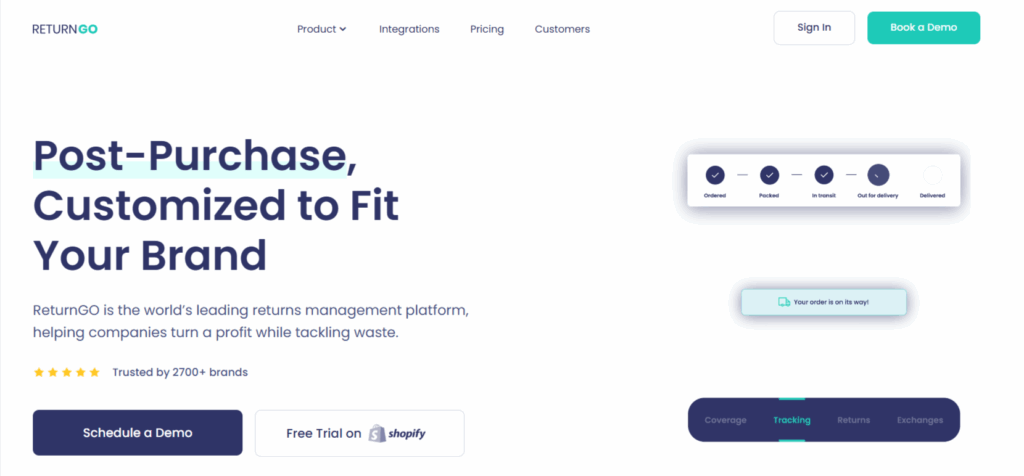
ReturnGO is a flexible RMS that lets merchants build return rules without writing any code. You can offer different options for different items such as refunds for some, store credit for others and add incentives for customers to choose exchanges. It integrates with fulfillment partners, 3PLs, and customer service platforms, making it a strong choice for mid-sized e-commerce brands scaling quickly. ReturnGO supports AI-based workflows, smart return logic, and branded emails to improve communication and automation. It’s especially helpful for brands that sell personalized or high-margin items where encouraging exchanges or store credit helps protect profits. Use cases include beauty, wellness, and custom apparel brands looking to optimize the post-purchase journey. If your business is growing and needs a return system that adapts with you and integrates cleanly with your stack, ReturnGO is worth exploring.
Each of these RMS platforms helps solve different return challenges. But before choosing one, it’s helpful to understand what to look for in a returns management system.
What to Find in a Returns Management System (RMS)
- Ease of Use: Look for a RMS platform with an easy-to-use return portal and simple dashboard for employees. Customer self-service capabilities take the burden off your support team.
- Exchange Capabilities: If revenue retention is key, choose a system that actively promotes exchanges or store credit instead of refunds.
- Integration with Other Tools: Your RMS should integrate with your e-commerce site, warehouse, shipping partners, and customer support tools to avoid data silos.
- Automation and Rules: A good RMS lets you customize workflows and automate approvals, label generation, and refund or credit actions.
- Fraud Protection: For high-volume or physical stores, preventing return abuse features are essential.
- Analytics and Reporting: Insight into return reasons and patterns helps reduce preventable returns and improve product quality.
- Scalability: Whether you’re processing 100 or 100,000 returns a month, the system should grow with your business.
Conclusion
Choosing the right system depends on your business model, return volume, and customer expectations. If you’re a small Shopify brand, Loop or Return Rabbit might be the right fit. If you’re an enterprise retailer focused on policy enforcement and AI, Narvar or Appriss Retail could be a better match. Sellers with complex global operations may prefer AfterShip or ReverseLogix, while sustainability-focused companies might look to Optoro.
Returns don’t have to be a cost center. With the right RMS in place, you can turn them into a way to keep customers happy, improve your products, and recover more revenue. Whether you’re handling 100 returns a month or 100,000, there’s a solution out there designed for your needs.